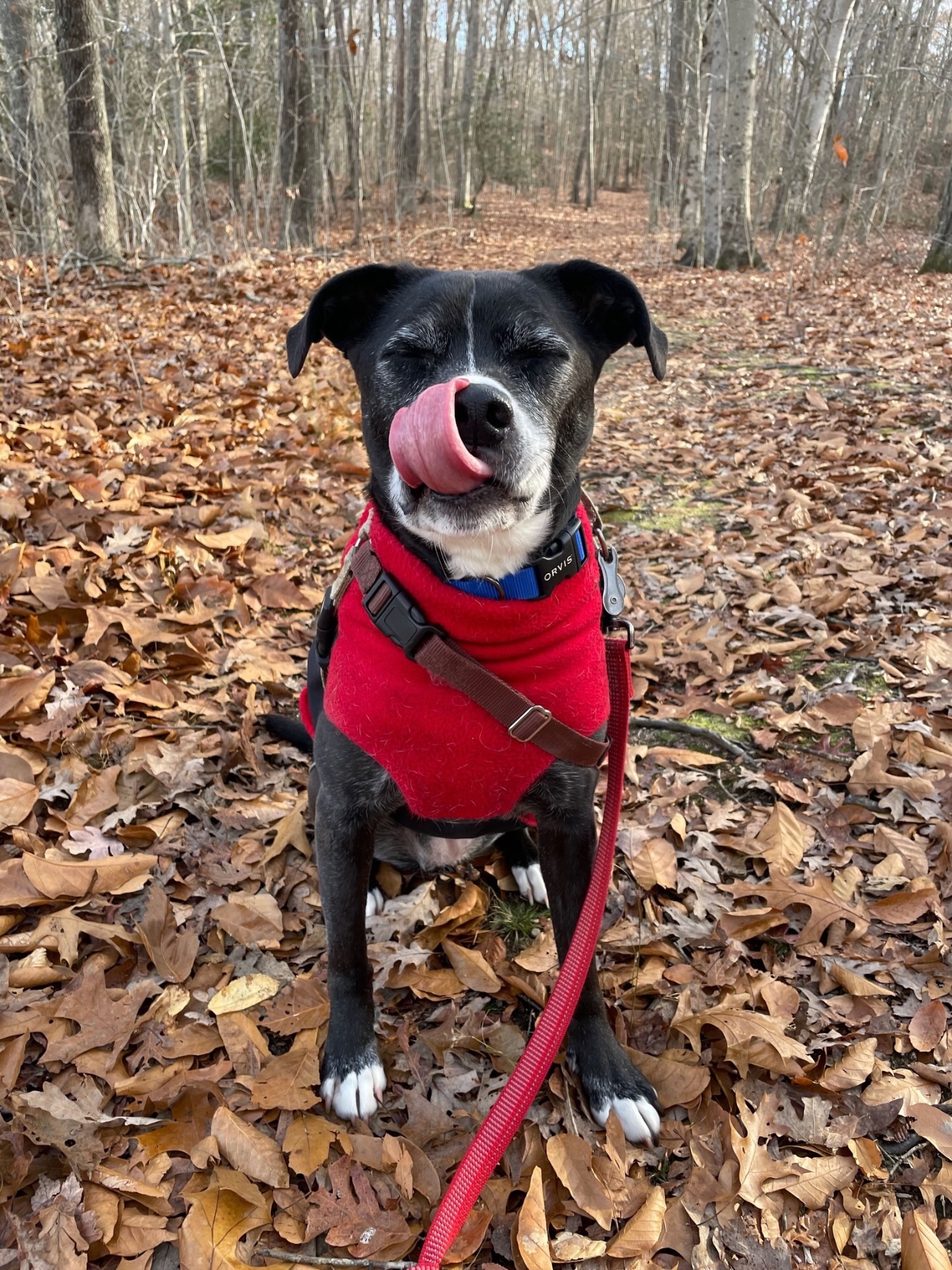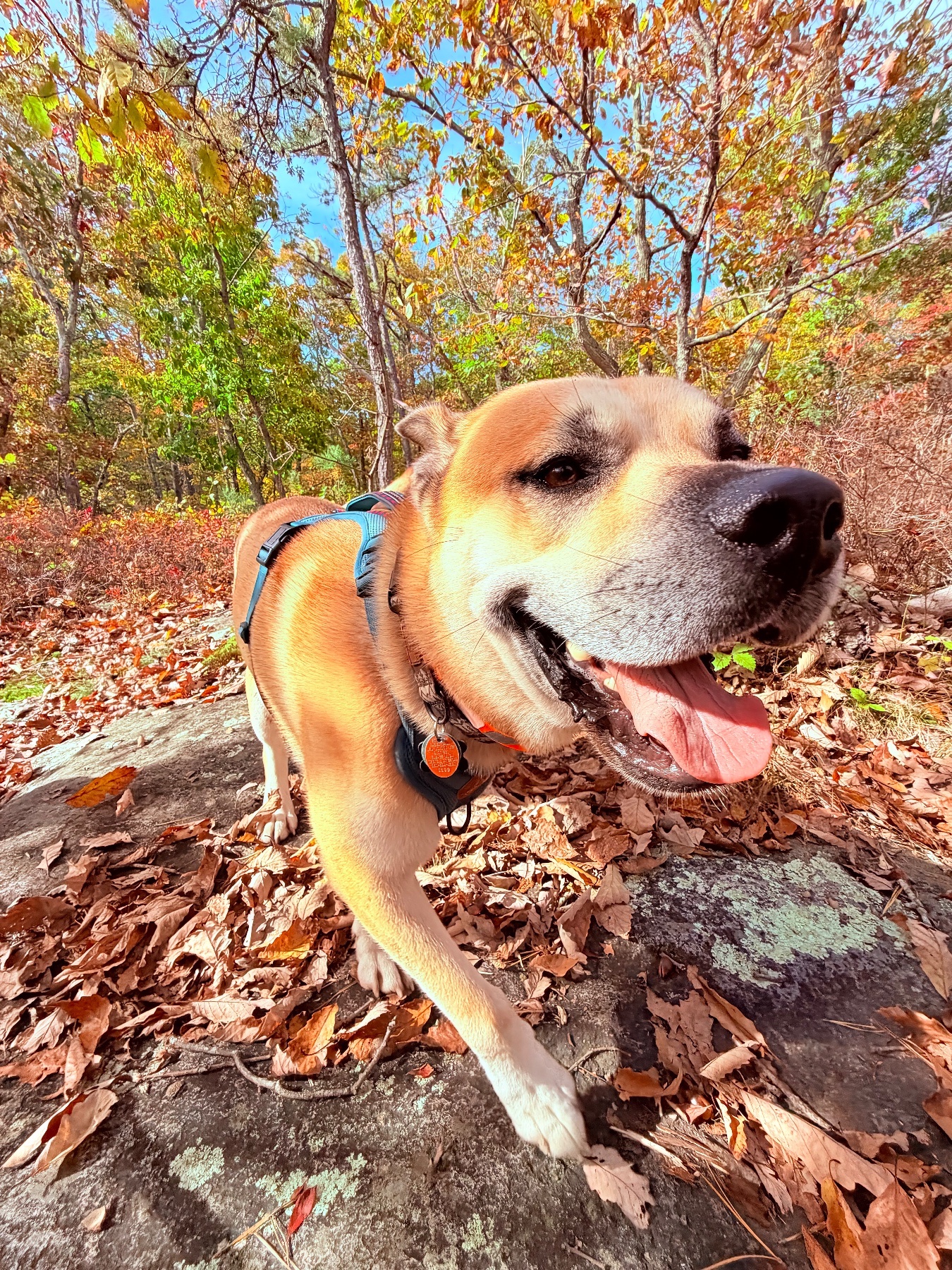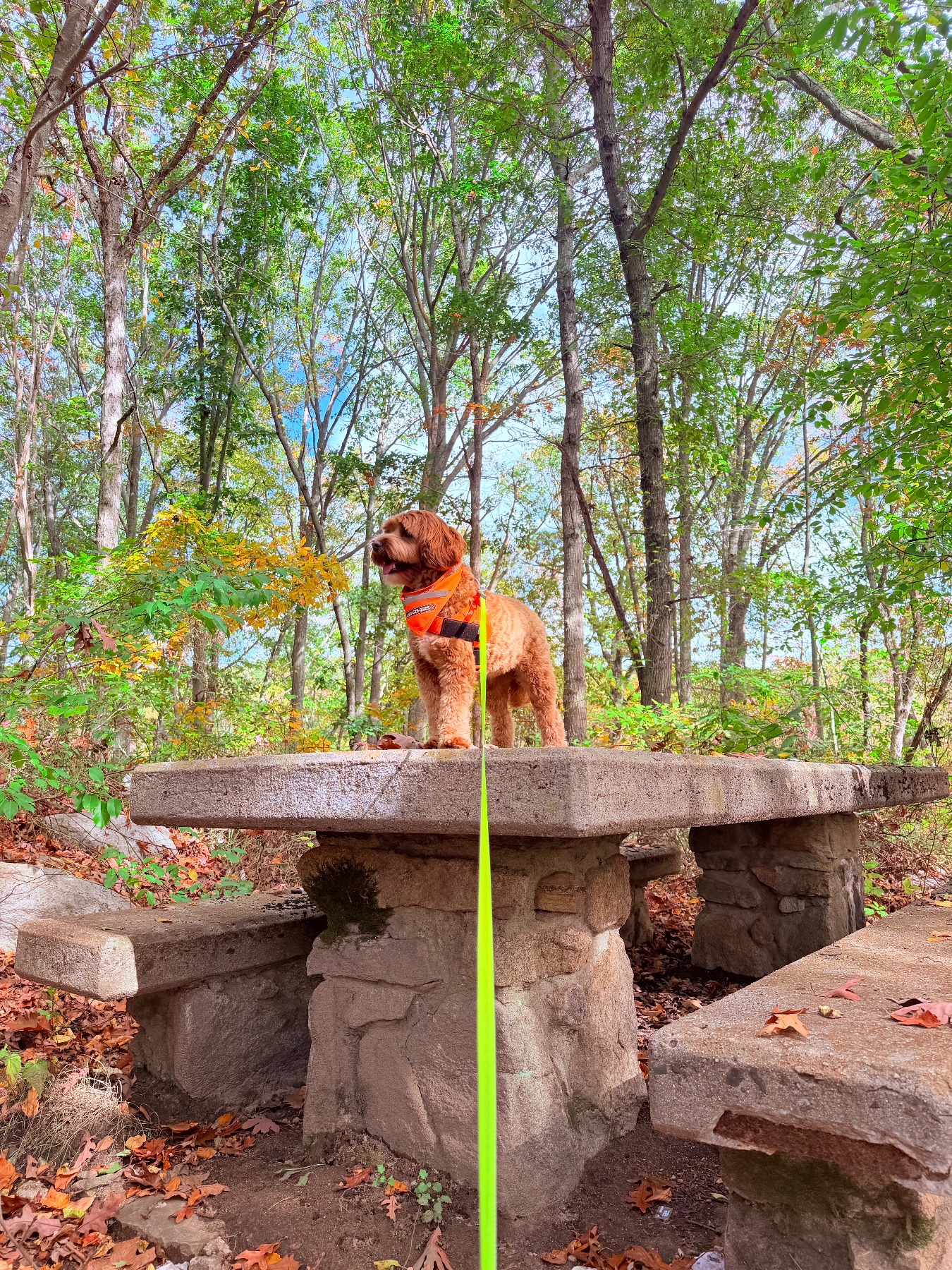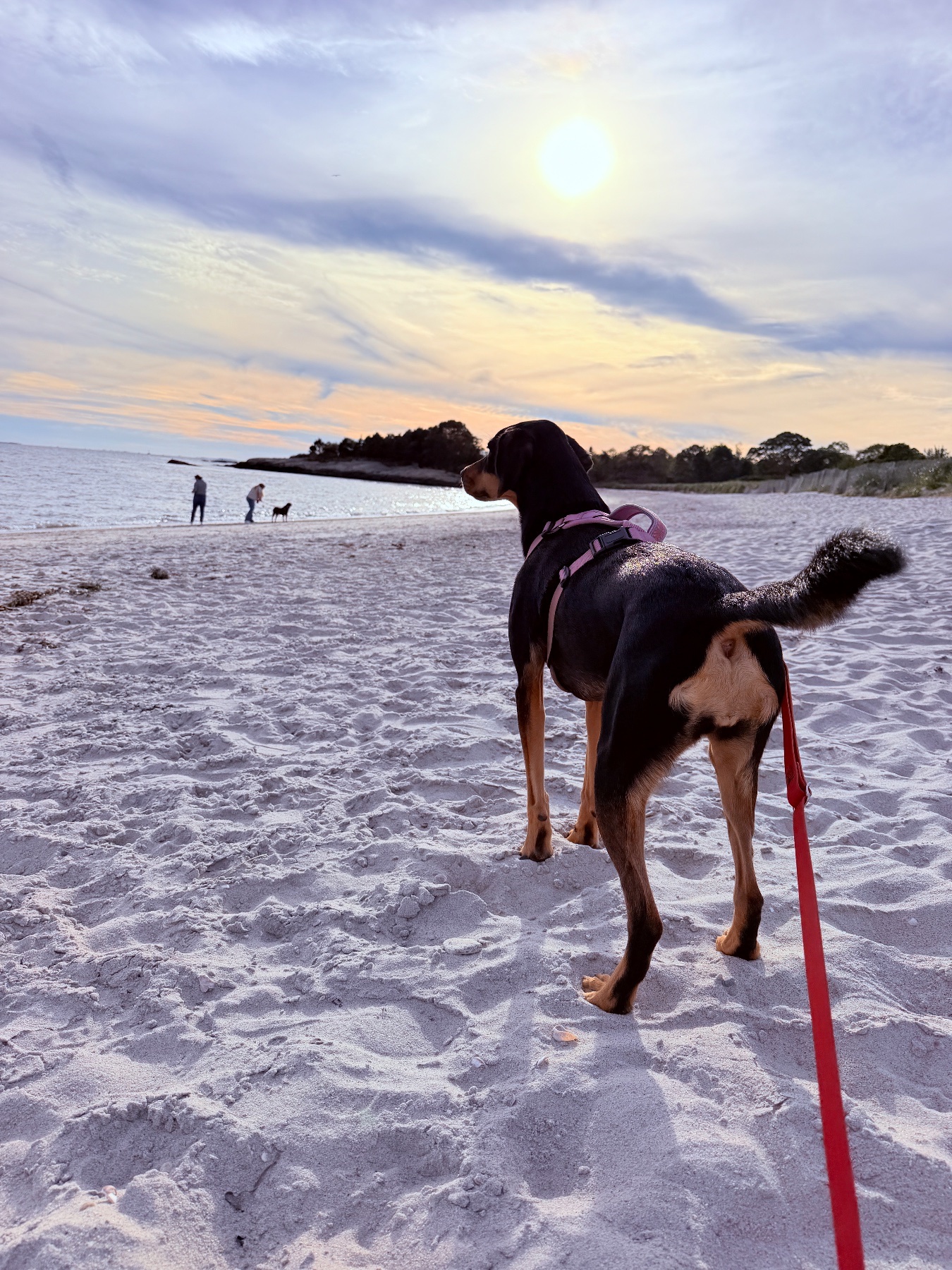
I’m writing this because I feel a shift happening in the dog world that is near and dear to my heart. We’ve spent a long time asking how to make dogs listen to us. Lately, I feel we’re starting to ask whether we’re listening to them.
I love dogs. I’ve built my life around them. And between my life with Zoey and my work at Tom’s Dogs, I care deeply about what their lives feel like to them. I want a dog to enjoy the time we spend together. I want to understand when something is difficult, even when that means changing a plan I thought was a good one.
There’s a familiar way of talking about dogs that leaves little room for that. A dog stops on a walk, and we call them stubborn. They struggle around other dogs, and we say they need more socialization. They pull away from someone, and we tell them to be nice.
Sometimes we’re so quick to decide what a dog should do that we skip over what they’re already telling us.
A dog who stops might be worried about something ahead. They might be tired, uncomfortable, or interested in a smell. We won’t always know right away. But calling them difficult doesn’t help us find out. I’d rather pause and consider what I might be missing before deciding that the dog needs correcting.
That willingness to pause is a big part of what I mean by listening. We don’t have to pretend we can read their minds. A yawn or a turned head doesn’t have one fixed meaning. We need to look at the whole situation and get to know the individual dog. And sometimes we need to admit we’re unsure.
At Tom’s Dogs, I come back to a simple idea: it’s their walk, not ours.
That means their experience needs to help shape it. There should be time to sniff. There should be room to move at a comfortable pace or get some distance from something that worries them. If I’ve planned an outing for a dog, I want to pay attention to whether that dog is actually enjoying it.
From our end of the leash, another stop at a patch of grass can seem pointless. From theirs, it might be the best part of the walk. I find it hard to justify taking a dog outside and then getting annoyed because they want to spend some time being a dog.
I also think we need to be careful about what we call a “good dog.” We often mean a dog who makes life easy for us. They’re quiet, they follow instructions, and they don’t interrupt our plans. Those things can be useful. But they don’t tell us everything about how the dog feels.
A quiet dog might be comfortable. They might also be having a hard time. A dog who stands still while someone pets them might enjoy it, or they might prefer some space. I want us to care enough to look beyond whether the dog is causing a problem.
Research gives us reason to take that seriously. A 2020 study of 92 companion dogs found that training relying heavily on aversive methods was associated with more signs of stress and larger increases in cortisol after training than reward-based training. The American Veterinary Society of Animal Behavior recommends reward-based methods for training and behavior modification. [1, 2]
To me, that means we need to ask how a dog is doing while they learn. Getting the behavior we wanted is only part of the picture.
And yes, dogs still need guidance. Recall matters. Walking safely matters. We’re responsible for keeping them and the people and animals around them safe. Living with a husky does not make me less aware of the need for boundaries.
But we can hold those boundaries while paying attention. We can teach a skill patiently, make a situation easier, or recognize when a dog needs a break. Listening gives us information we can use to make better decisions.
What moves me about all of this is how much attention dogs already give us. They learn our routines and notice the small things we do before a walk or a meal. They spend their lives learning how to live alongside us. I want to put that same effort into understanding them.
I want to know what they choose when they have the chance. Which dogs they enjoy being around. Whether they want more activity or a quiet place to rest. And I want to stay open to learning that something I thought they enjoyed may need another look.
I hope we can make room for people to learn, too. Plenty of people followed old advice because they loved their dogs and thought they were doing the right thing. We should be able to question that advice without making someone feel ashamed for having believed it.
I don’t think the whole dog world has changed. But I feel the conversation changing, and I’m glad to be part of it. I want more dogs to have people who notice when they’re uncomfortable and take that discomfort seriously. I want them to have choices where we can safely offer them.
That matters to me as Zoey’s person. It matters just as much when someone trusts me with their dog.
We’ve asked dogs to listen to us for a very long time. I think we owe them the same care and attention.
References
[1] Vieira de Castro, A. C., et al. (2020). Does training method matter? Evidence for the negative impact of aversive-based methods on companion dog welfare. PLOS ONE, 15(12), e0225023. https://doi.org/10.1371/journal.pone.0225023
[2] American Veterinary Society of Animal Behavior. Humane Dog Training Position Statement (2021), reaffirmed in 2025. https://avsab.org/resources/position-statements/
Help with the everyday routine
A trail outing could fit your workday.
Pickup and a structured small-group hike give your dog time to move and explore while you handle your day. We assess group fit first.
Ask about pack hikeSee what’s included