
Fit before convenience
A dog is not placed into a group simply because the timing works. Social comfort, stamina, leash handling, play style, prey drive, health, and recovery all matter.

The Tom's Dogs safety standard
Safety is not one credential, one piece of equipment, or one promise. It is a system of decisions made before pickup, throughout the outing, and after every dog is home.
Our operating principle
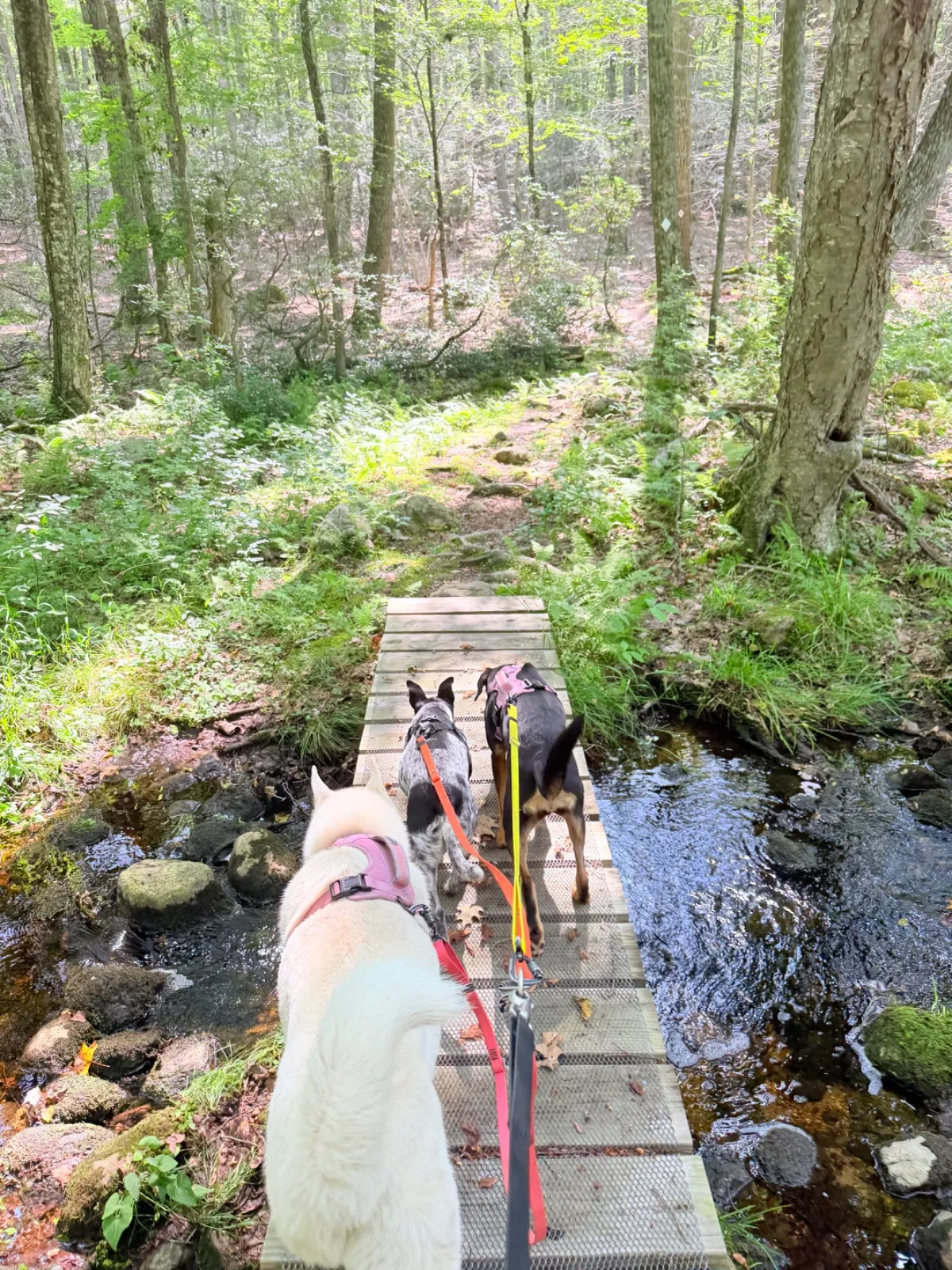
A polished pack photo is the end of many small decisions: which dogs belong together, what route suits them, how they enter and exit, when to add distance, when to slow down, and when the correct decision is to change the plan entirely.
Tom's Dogs prioritizes the dog in front of us over a rigid schedule, an impressive-looking group, or an easy promise.
Six non-negotiables
A dog is not placed into a group simply because the timing works. Social comfort, stamina, leash handling, play style, prey drive, health, and recovery all matter.
Pack hikes are on-leash outings. Structure helps us manage transitions, terrain, wildlife, changing trail conditions, and the relationships within the group.
Heat, humidity, storms, air quality, ice, mud, and trail hazards can change the route, pace, duration, water breaks, or whether a neighborhood walk is safer that day.
Useful exercise is not exhaustion. We watch pace, breathing, gait, engagement, arousal, and the ability to settle, then adjust rather than forcing a predetermined performance.
Clients are expected to disclose health conditions, medication, triggers, bite history, escape risk, handling sensitivities, and meaningful changes before care begins.
Clients receive a GPS route when applicable, real photographs, and a useful report. Concerns, irregularities, or changes that matter are communicated plainly.
Before · during · after
The work begins before a leash is clipped and continues after the report is sent.
Review the dogs, health information, weather, route, terrain, timing, and any recent client updates.
Watch handling, gait, breathing, arousal, group spacing, environmental pressure, and recovery.
Return the dog, complete the route and report, share media, and communicate anything the client should know.
Weather-aware care
When conditions call for it, an outing may be shortened, slowed, moved to shade or safer terrain, given additional water and recovery breaks, or changed to a structured neighborhood walk.
Prepared to respond
What we need from clients
Health conditions, medication, pain, mobility limitations, and recent veterinary guidance.
Triggers, reactivity, bite history, resource guarding, escape risk, and handling sensitivities.
Changes in appetite, energy, elimination, gait, behavior, or home access that could affect care.
Accurate contact information and clear emergency and veterinary instructions.
New clients
Tell us about your dog’s health, behavior, handling needs, social comfort, and routine. Useful care starts with complete information.