On November 1, daylight saving time ends and the evening gets darker an hour earlier. The National Institute of Standards and Technology explains that returning to standard time shifts an hour of daylight from evening to morning.
We go from 2am back to 1am in one night. Your dog’s routine doesn’t necessarily catch up that neatly. Dinner seems later, and suddenly the familiar after-work walk starts near dusk. The same route can look and sound different after dark.
A little planning helps. You don’t need to overhaul the whole routine.
Keep the routine recognizable
If your schedule allows, move meals and outings in small steps instead of changing everything at once. A few gradual adjustments make the new time feel less abrupt.
Watch how your dog handles the change. Some carry on along the darker route without a concern. Others get more alert, hesitate near shadows, or react to people and dogs they’d normally ignore in daylight.
Let that shape the outing. Give the dog, or dogs, more room from surprises, choose a familiar route, or head out earlier when you can.
Treat late afternoon as a low-light walk
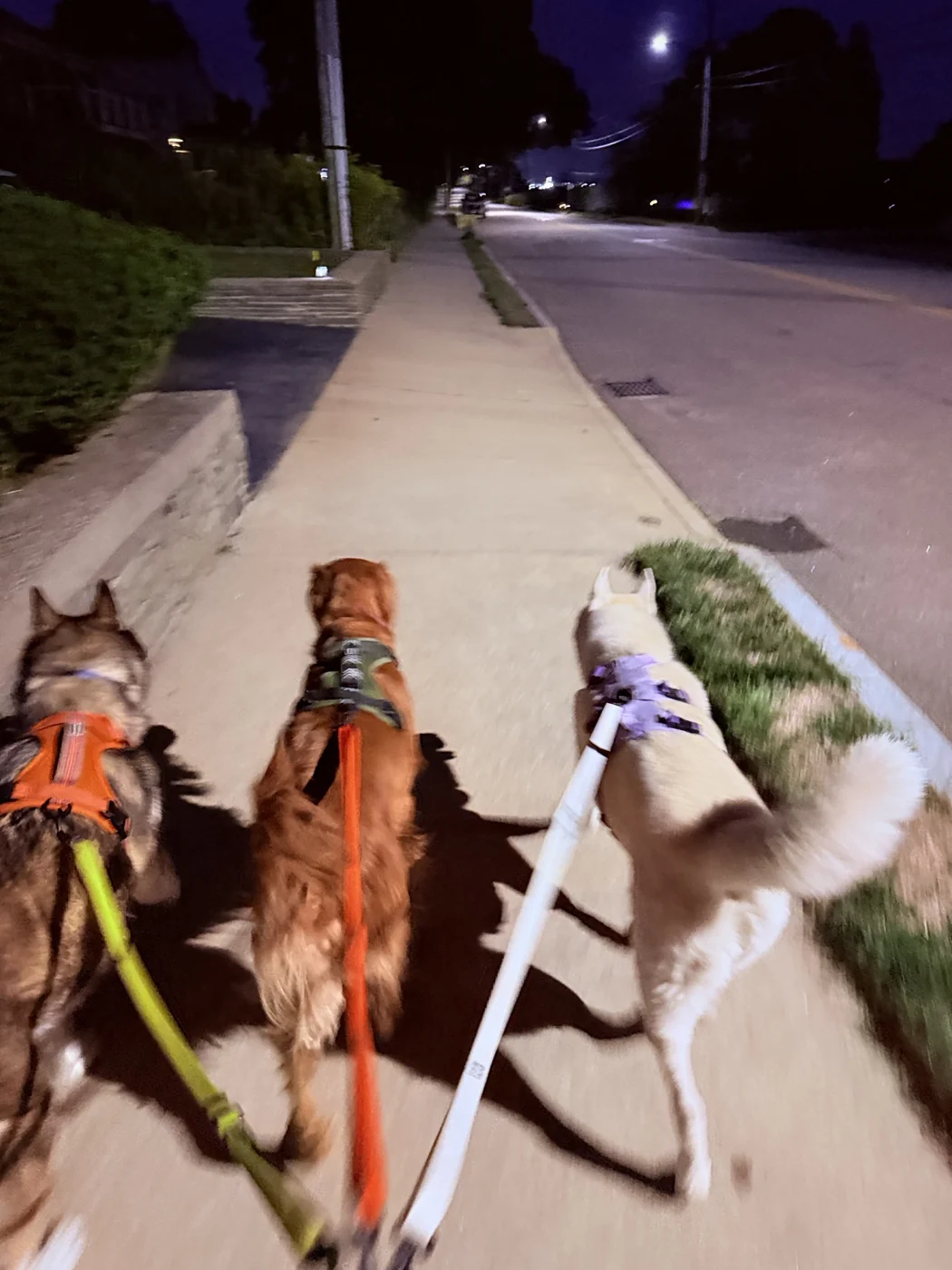
By November, a walk that starts in daylight may finish in the dark whether intended or not. Prepare for the end of the outing, not only the beginning.
Here’s what I’d have ready:
- A charged flashlight or headlamp
- Reflective material or a light where drivers can see it
- A secure, well-fitted leash and harness
- A route with sidewalks, lighting, and sensible crossings
- Enough time to avoid rushing through the return home
The National Highway Traffic Safety Administration advises we use sidewalks when available, cross at intersections or crosswalks, stay alert, and use reflective material or a flashlight at night.
Visibility gear helps people and drivers notice you, but it doesn't make traffic predictable. Keep watching driveways, turning cars, parking lots, and road crossings. Drivers around here aren’t the best.
Make the handling quieter
Darkness can make ordinary things appear suddenly, too. A person in a dark coat, a dog stepping out from behind a car, or a skunk by the dumpsters might change things up quickly.
Keep the leash manageable near roads and driveways, and put your phone away. If your dog needs a moment to look at something, pause where you’ve got room instead of pulling both of you toward it.
A shorter, calmer outing can be more useful than pushing through the usual loop while your dog stays tense.
Tell your walker what changes after dark
Share the details that affect your dog's care. Tell your walker if your dog is less comfortable after sunset, startles at headlights, or uses particular visibility gear. Make sure that gear is easy to find and still fits.
A Neighborhood Walk can move earlier or use a more familiar route when the schedule allows. A Night Walk can give a dog a calmer evening reset with the handling and visibility that darkness requires.
The clock change is a reminder to look at the walk again. Same dog, same neighborhood, different conditions. Good care notices the difference.
Official references
National Institute of Standards and Technology, Daylight Saving Time Rules
National Highway Traffic Safety Administration, Pedestrian Safety
Help with the everyday routine
A trail outing could fit your workday.
Pickup and a structured small-group hike give your dog time to move and explore while you handle your day. We assess group fit first.
Ask about pack hikeSee what’s included